
The Namibian Story
The Story
Heritage, values & traditions behind our livestock.
Production
Animal Welfare
Meat Qualities
Community
A Namibian Story
A Tale of Resilience
& Adaptability
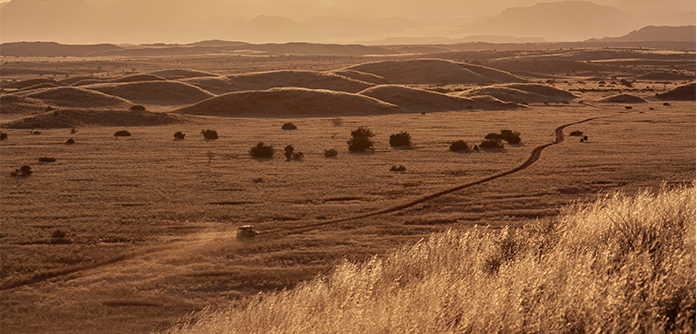
Namibia, home to the oldest desert on earth, is where vast open landscapes stretch beyond the horizon and the crisp air tells the ancient stories of resilience and adaptability of the land, its people and its animals. This is where the legacy of Namibian meat is born. As one of the least populated countries in the world, livestock production has been a life-line for generations of Namibians, and is deeply woven into the Nation’s identity.
As the first African country to add environmental protection to its constitution, Namibia showcases a strong commitment to preserving its natural resources together with preserving centuries of tradition and ancient methods of farming, which still supports communities today.
Ever Changing conditions requires adaptation and cultivates resilience. Namibian meat is more than just sustenance. Every bite tells the story of generations of farmers who have perfected the art of adaptability, producing meat which is naturally lean, tender and infused with the rich, earthy flavors of the land.
Namibian meat is a testament to resilience, tradition, and the delicate harmony between nature and nurture. From farm to table, Namibian meat carries the untamed spirit of its homeland – authentic, unforgettable and a testimony to grace. It fuels an economy, sustains communities, nourishes the future, and brings warmth to every home it reaches.
From my Namibia. To you.
Namibia’s livestock production system is defined by its extensive, low-input, and climate-adapted approach, underpinned by robust veterinary oversight and traceability
The natural production environment contributes directly to the quality, safety, and sustainability of Fan Meat-certified products and positions Namibia as a credible source of high-quality, ethically produced red meat, aligned with both consumer expectations and regulatory demands in premium international markets.
Veterinary Oversight and Prudent Antibiotic Use
Antibiotics are used only for therapeutic purposes under the supervision of registered veterinarians. There is no routine or prophylactic use permitted.
Control measures include:
- Enforced withdrawal periods before slaughter
- Random residue sampling as part of the national surveillance plan
- Compliance with Codex Alimentarius Minimum Residue Levels and EU residue standards
Traceability and Farm Assurance
All livestock are tagged and registered under the NamLITS (Namibian Livestock Identification and Traceability System).
This allows for:
- Full traceability from farm of origin to export abattoir
- Linkage of animal health, movement, and treatment data
- Transparent supply chain monitoring and recall capability
Extensive Natural Production System
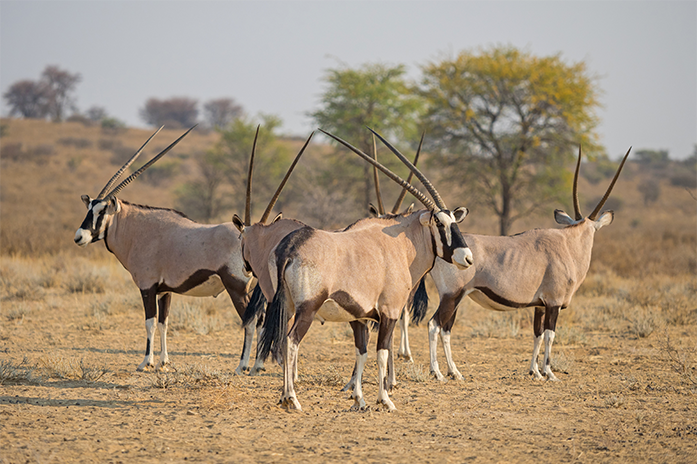
The majority of Namibia’s cattle and small stock are raised on open rangelands under an extensive grazing system. Animals are not confined or intensively managed; instead, they utilize natural pastures across large grazing units averaging 5,000–10,000 hectares.
This system:
- Supports low-stress animal handling
- Reduces disease prevalence due to low stocking densities
- Ensures meat with a favourable lean-to-fat ratio
- Supports natural growth trajectories
- Provide meat that aligns with consumer preferences for minimally altered products
Prohibition of Growth-Promoting Hormones
In line with national legislation and international market requirements (e.g. EU, Norway, and China), the use of growth-promoting hormones is strictly prohibited in Namibia.
Regulatory enforcement is ensured through:
- National residue monitoring programmes implemented by the Directorate of Veterinary Services
- Farm audits and certification under both the Directorate of Veterinary Services and the Fan Meat scheme
- Export abattoir compliance inspections
Animal Welfare
At Fan Meat, animal welfare is not an optional add-on — it is a fundamental principle that underpins the integrity of Namibia’s meat production system.
Our assurance framework aligns with both national legislation and internationally recognised standards, ensuring that all animals are treated humanely throughout their lives. Namibia’s reputation as a responsible meat-exporting country is built on a shared commitment to treating animals with dignity — from birth to slaughter. At Fan Meat, we ensure that this commitment is upheld across the value chain.
Legal and Ethical Foundation: Namibia’s animal welfare practices are governed by the Animal Protection Act, 1962, and reinforced by specific requirements under the Fan Meat Scheme
These are in alignment with the World Organisation for Animal Health (WOAH) standards for the welfare of production animals.
Production Standards: Namibia’s natural rangeland production system supports animal welfare by design. Animals are:
- Reared in low-density, extensive systems
- Able to exhibit natural behaviour (grazing, walking, social interaction)
- Handled infrequently and with low-stress techniques
High value beef production entails rearing of cattle on natural rangeland, and rounding off in FAN Meat registered feedlots, where improved animal welfare practices are required, monitored and maintained.
Handling, Transport & Slaughter: Animal handling is governed by Good Handling Practices (GHP). Producers, transporters, and abattoir staff receive regular training in:
- Low-stress herding and loading techniques
- Proper handling during transport, with regular rest and access to water
- Humane slaughter procedures, including pre-slaughter stunning, as per Codex and WOAH guidelines
Monitoring is conducted at key control points, especially at export-approved abattoirs.
Audits and Compliance: Animal welfare standards are enforced through:
- On-farm audits and assessments as part of Fan Meat certification
- Veterinary inspection at abattoirs
- Corrective actions and possible suspension for non-compliance
Training and Capacity Building: Fan Meat promotes continuous improvement by offering:
- Farmer and worker training in animal welfare best practices
- Development of welfare protocols tailored to Namibia’s production environment
- Inclusion of welfare indicators in certification systems
Unique qualities of Namibian Meat
Namibian beef is internationally recognised for its exceptional quality, natural production methods, and ethical origin.
Reared on open rangelands with no artificial growth stimulants, it offers a product that meets the highest expectations of discerning consumers and premium markets. Namibian beef is more than just a product — it’s a reflection of the land, the people, and the values that shape its production. With Fan Meat, you’re choosing beef that is naturally lean, rich in flavour, and ethically produced to meet the highest global standards.
Lean by Nature
Namibian cattle are reared extensively on natural pasture. As a result, the beef is:
- Naturally lean, with lower intramuscular fat
- High in protein and essential nutrients
- Well-suited for health-conscious consumers
High Quality or Grain Fed Beef production adds a period of feedlot finishing of extensively reared cattle.
Rich, Distinctive Flavour
Namibian beef is known for its clean, robust flavour, which is directly influenced by:
- A diverse diet of indigenous grasses and shrubs
- Stress-free handling and natural growth cycles
- Low-intensity farming methods that allow animals to develop full flavour profiles
- Exceptional welfare practices
This results in beef that is both tender and distinctively flavoured, ideal for gourmet cuisine and export markets alike.
Ethically Produced
Namibian beef stands out for its ethical and transparent production systems, which are rooted in:
- Extensive free-range rearing
- Closely monitored grain finishing in high value or grain fed beef production
- No use of growth hormones
- Responsible antibiotic use, only under veterinary supervision
- Strong animal welfare protocols aligned with international standards
All Fan Meat-certified products are fully traceable through Namibia’s national livestock identification system, ensuring transparency along the value chain.
Community Livelihood
Livestock farming is not just an economic activity in Namibia — it is a cornerstone of rural livelihoods and a key driver of social stability and development.
The Fan Meat scheme plays a vital role in ensuring that the benefits of ethical meat production are equitably shared across communities. By choosing Fan Meat, consumers and buyers are supporting a value chain that protects not just animals and ecosystems, but also the people who rely on livestock to survive and thrive.
Need more information about FAN Meat?